


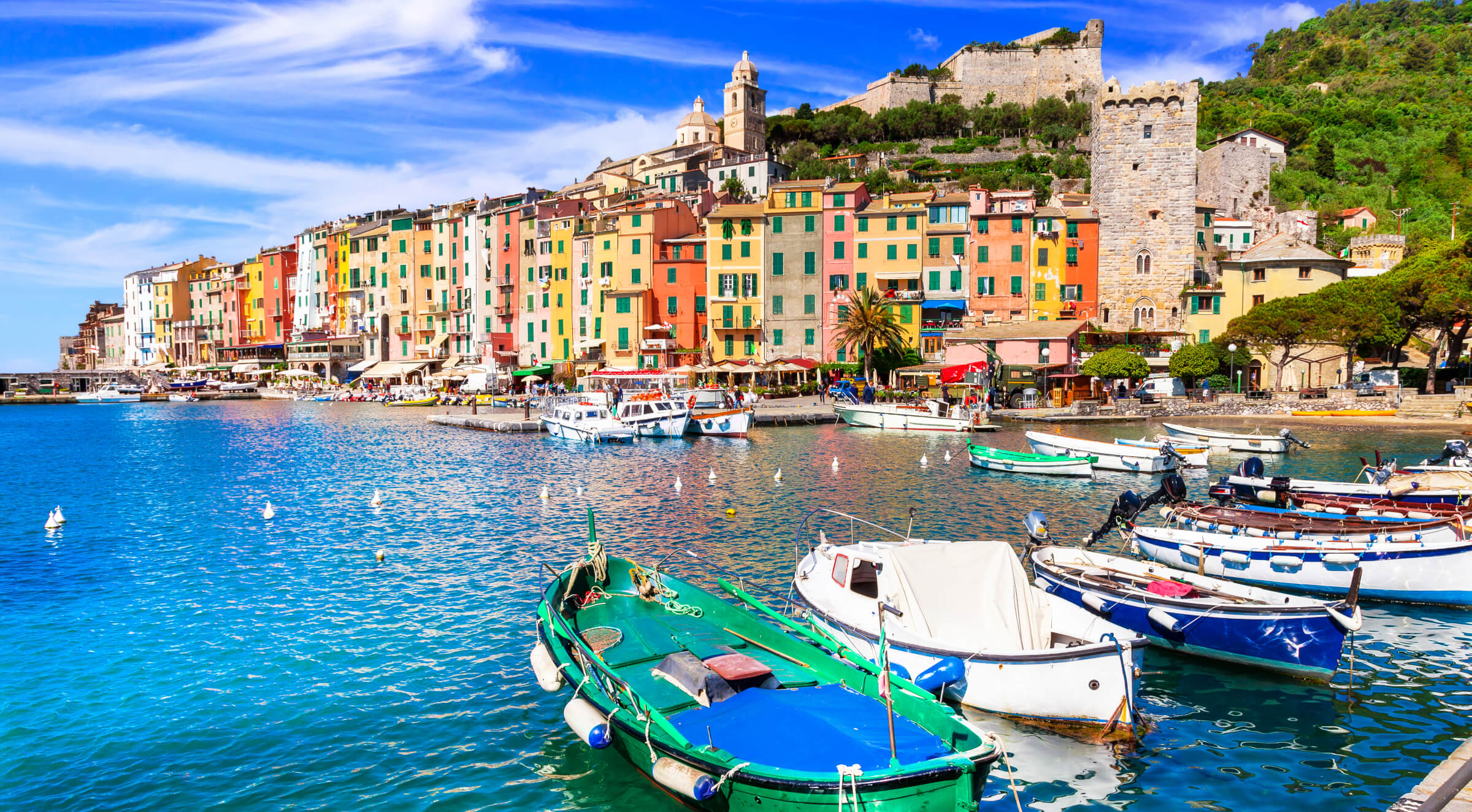
Explore the seaside town of Portovenere
Portovenere is a small medieval town on the Ligurian riviera a stones throw away from the Cinque Terre. Designated a UNESCO World Heritage Site, the beautiful town sits at one end of the “Golf of Poets”, a deep wide bay which stretches between the coastal towns of Lerici and Portovenere.
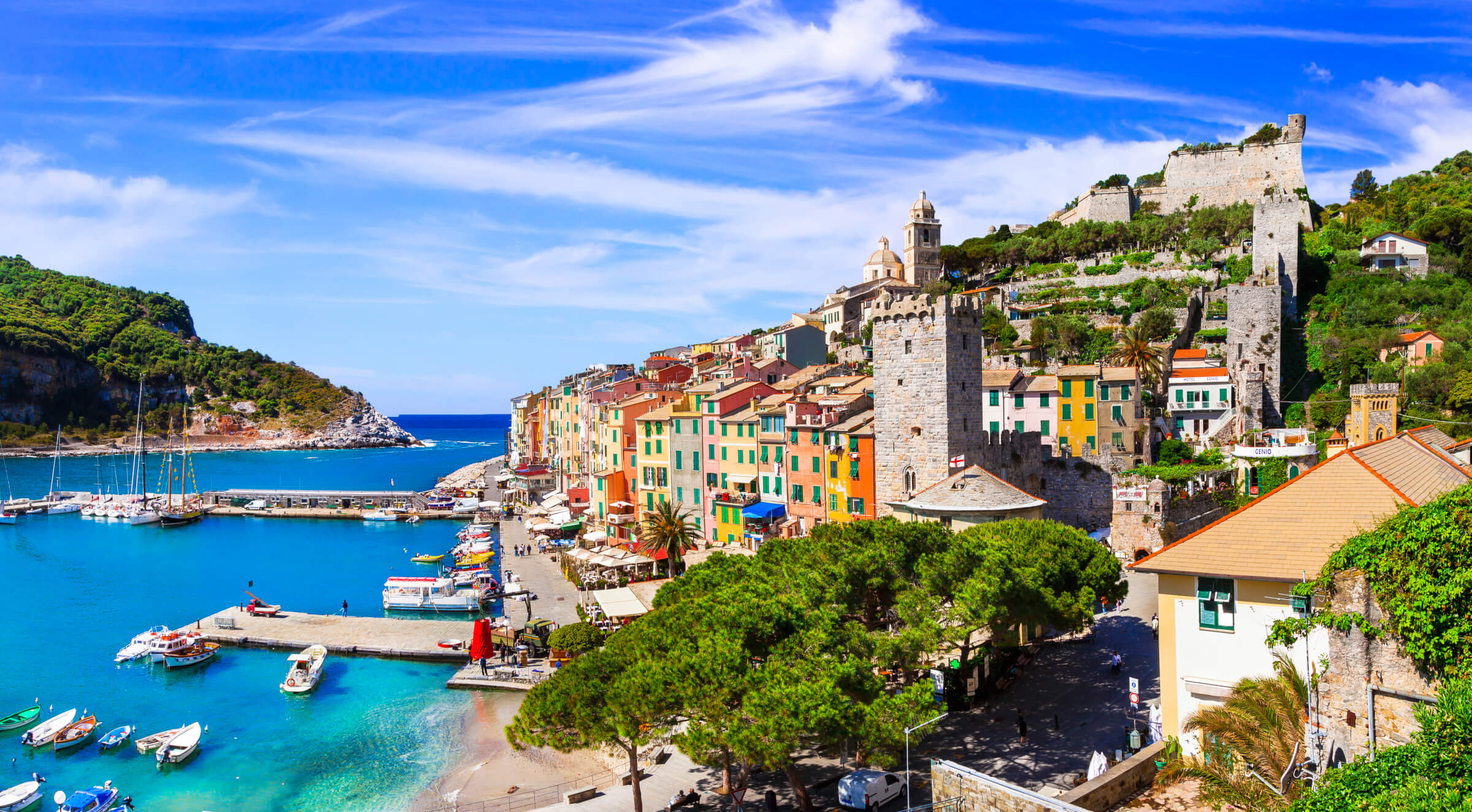
History of Portovenere
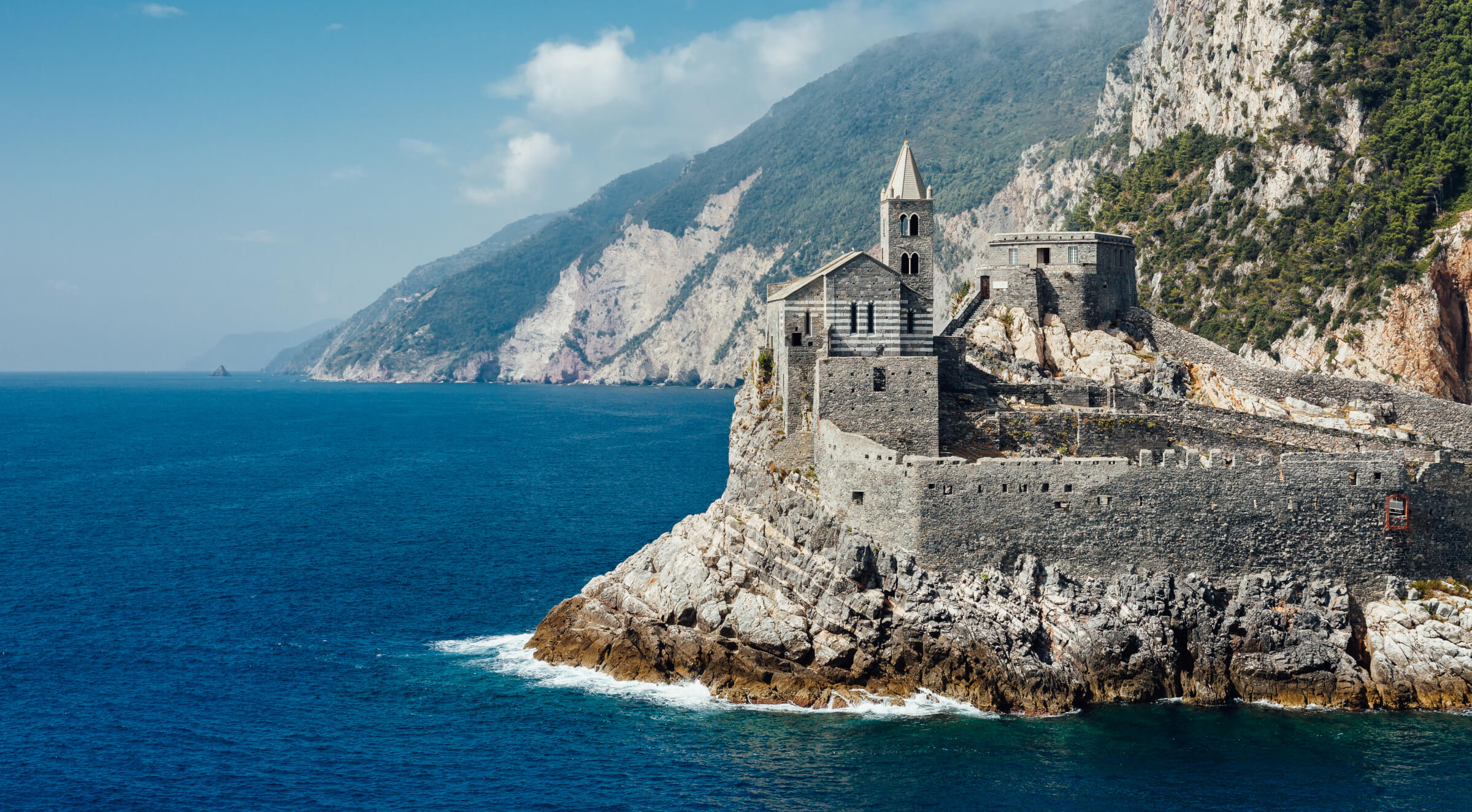
The Ancient coastal village Portus Veneris (the port of Venus) is believed to date back to the middle of the 1st century BC as a small fishing community. It is believed that the name, Portus Veneris, refers to a temple dedicated to the Goddess Venus, which was once located on the rocky promontory at the head of the bay where the church of St. Peter now stands. According to legend, Venus was born from the foam of the sea after her father, Uranus, was overthrown. At the tip of the peninsula of Portovenere the waves break against the rocks which results in a large amount of foam, giving the name Portus Veneris.
With the fall of the Roman Empire, Portovenere became a base for the Byzantine Empire who built a military fortress, which was destroyed by the Lombards during the 7th century.
During the 12th century the town became part of the Republic of Genoa. Portovenere was a strategic point, needed in Genoa’s war against Pisa for dominance of the Ligurian Sea. Castello Doria was built, and the town was fortified once again.
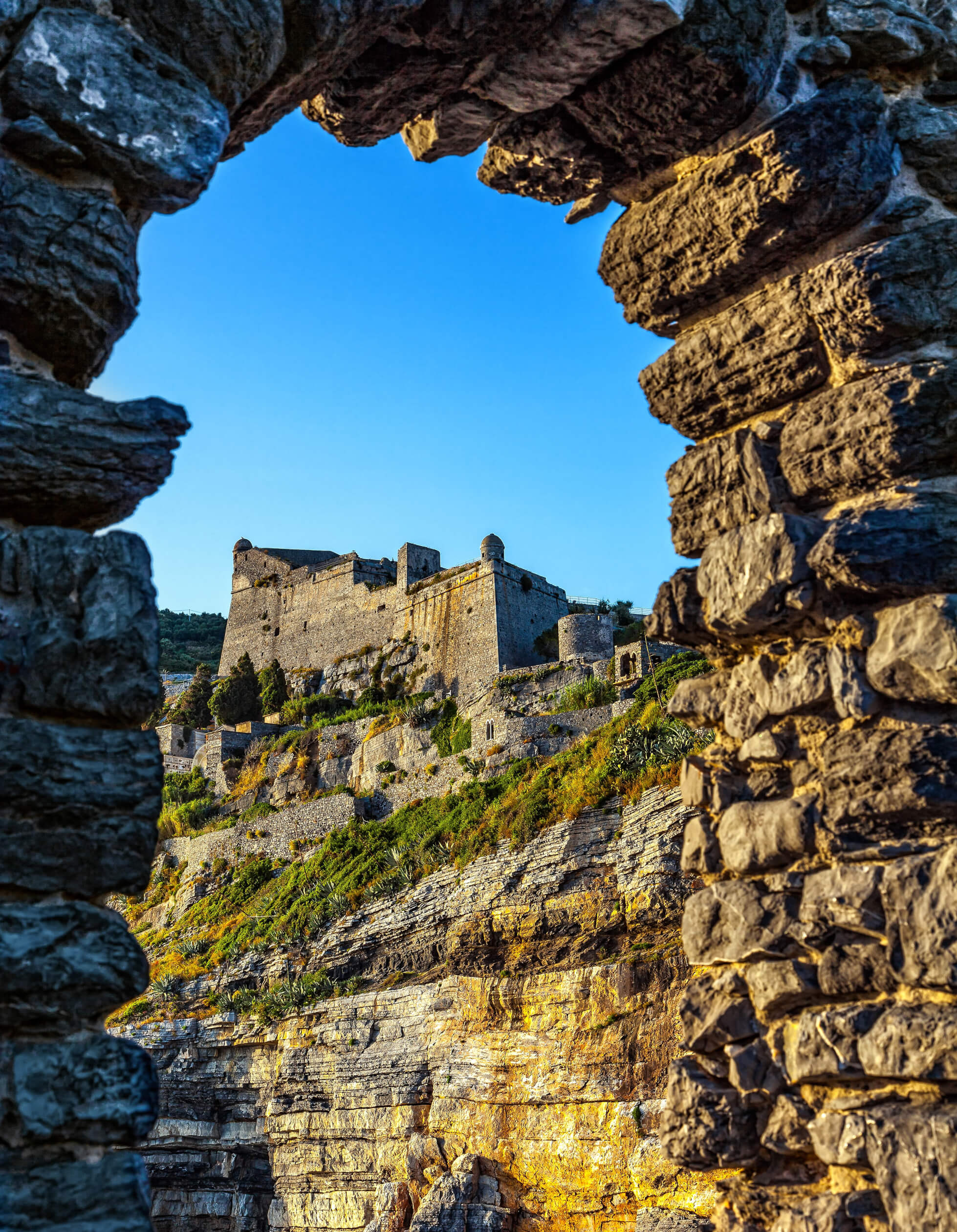
Castello Doria (Castle Doria)
The castle was built in 1161 on the remains of an earlier fortification, possibly the fortress from the Byzantine era, however, archaeologists are unsure whether the castle was built from scratch or if the pre-existing fortress was re-built.
The castle was damaged and destroyed many times during Genoa’s war with Pisa and around the second half of the 15th century, Genoa decided to demolished and re-build the castle to a more modern specification.
Today the ancient Genoese fortress is owned by the Municipality of Portovenere and, after careful restoration, is home to art exhibitions in various events that take place throughout the year.
Entrance fee: € 10
Open 10am - 5pm
Chiesa di San Pietro (Church of St. Peter)
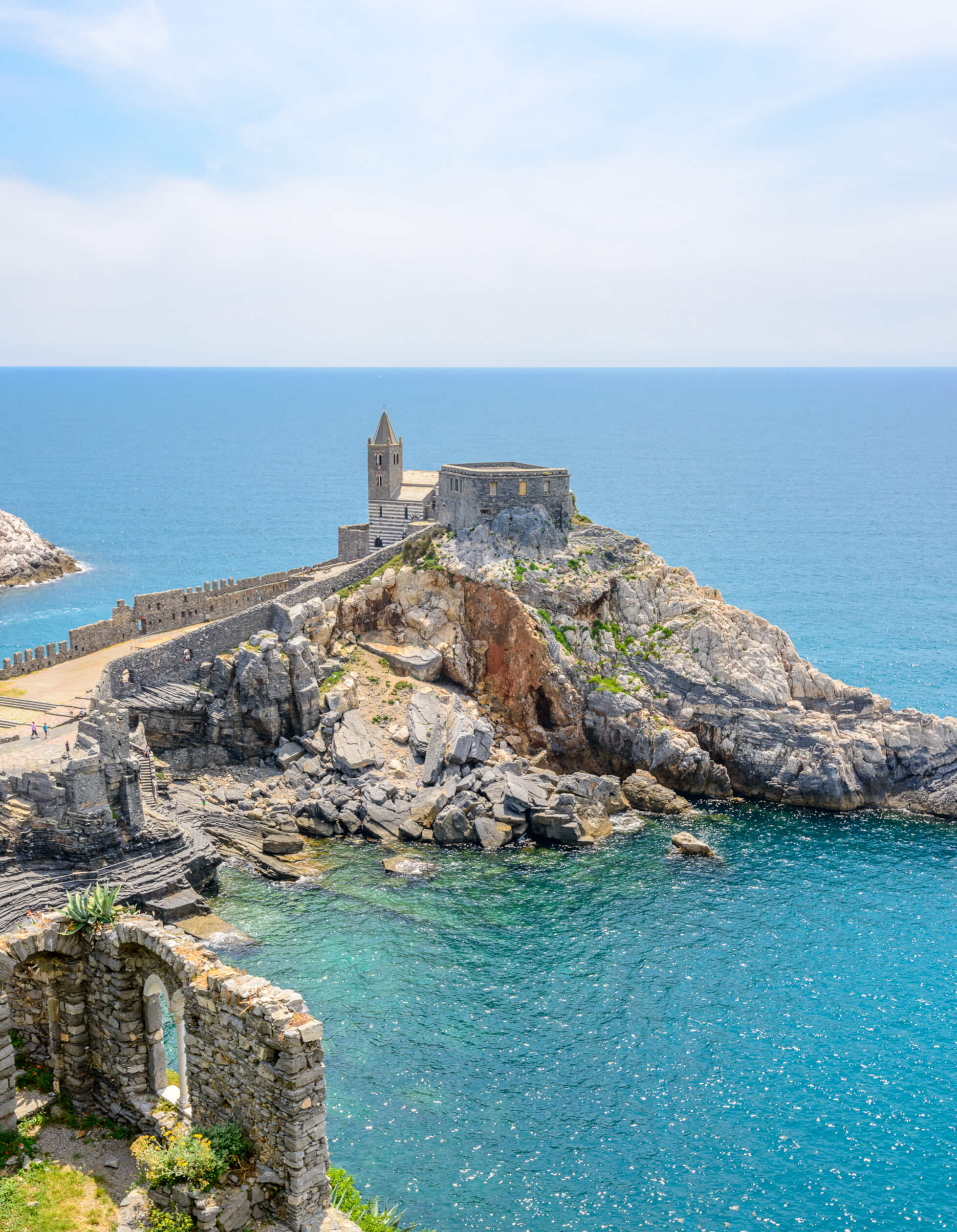
On a rocky promontory at the head of the bay stands the church of San Pietro. The church was officially consecrated in 1198 and built on the ancient remains of a Roman temple dedicated to Venus. The black and white striped walls date from the 13th century and were added by the Genoese. Inside is dark and modest and on the right side of the entrance, you can see the original foundations of the old temple.
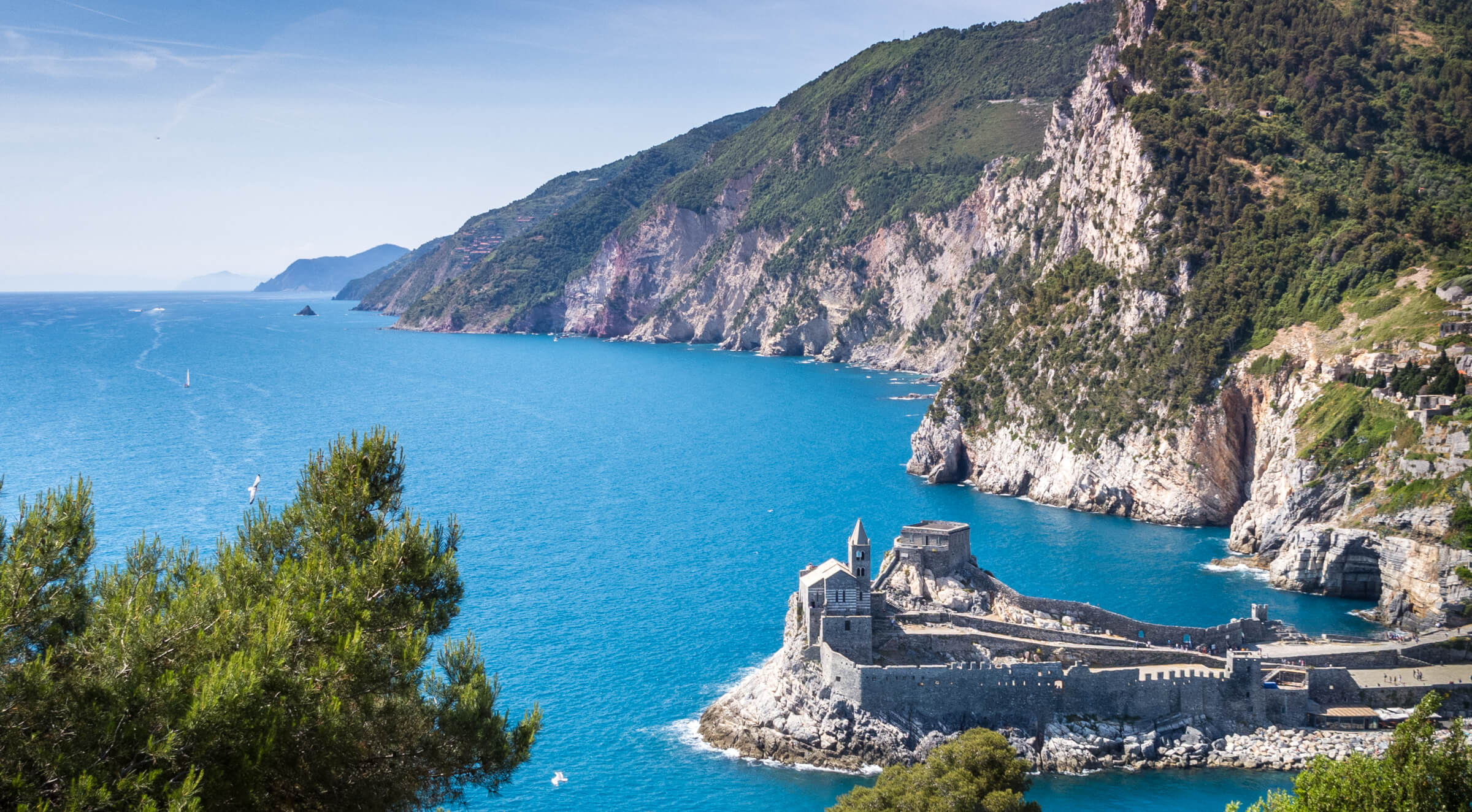
The adjacent bay was renowned to be a favourite bathing spot for Lord Byron, and is known today as the Bay of Poets and its crystal clear waters remain as enticing as ever.